What is my South Node, and where is it?
Opposite your North Node, and a few minutes of birth time can shift the house.

Your South Node is the point on your chart directly opposite your North Node. Its sign usually comes from your birth date, and its house depends on your birth time and place. Vedic astrology calls the same point Ketu.
What the South Node is
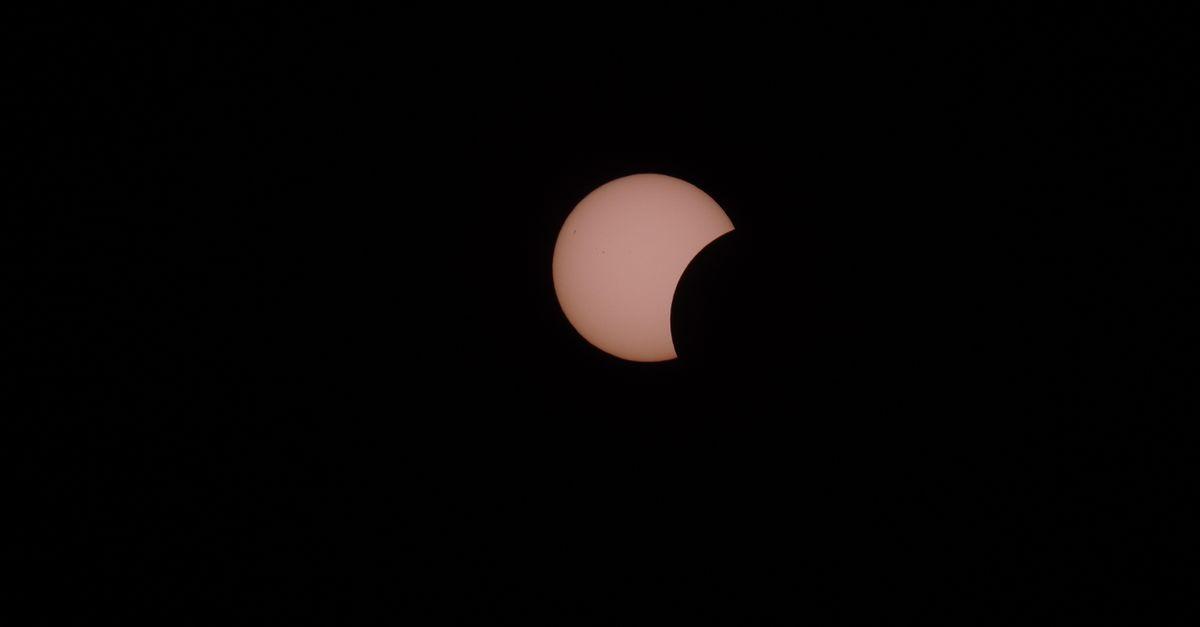
The nodes are calculated points, not physical bodies. They mark where the Moon's orbit crosses the apparent path of the Sun, and astronomers can compute them for any date. Astrology then uses them as points for interpretation.
Because the South Node always sits opposite the North Node, the two form one axis on your chart. Western astrology reads that axis as a pair of points. Vedic astrology calls the pair Rahu and Ketu, with Ketu standing for the South Node.
The meaning most people search for comes from interpretation. One popular reading describes the South Node as your past life and the innate gifts that come with it. That is a traditional way of reading the point. The calculation gives you a position, and the story is something you bring to it. Test it against your own experience rather than accepting it because a chart says so.
Why the sign and house need different details
The sign is the easy part. A free lunar nodes calculator can work out your North and South Node signs from your birth date, because the nodes move slowly enough that a date usually settles the sign.
The house is different. Houses are sections of your chart, and where their edges fall depends on the exact time and place you were born. That is why a guide to the South Node asks for your date, time and location together.
Take two people born on the same date in the same city. One was born at 07:00 and the other at 22:00. Suppose a house edge falls at 09:30 local time that day, which is an illustrative figure and not a real chart boundary. The first person's South Node could land in one house and the second person's in another, even though both share the same sign. If your birth time is uncertain, treat the house as provisional until you can confirm it.
Four checks before you read the result
A South Node result has four parts, and each one answers a different question. Missing any of them changes how far you can trust the output.
| Check | What to look at | What it tells you | If it is missing |
|---|---|---|---|
| Which point | Does the label say South Node or North Node? | Confirms you are reading the correct point | Recheck the label before going further |
| Birth date | The date the tool used | Sets the sign of the point | The sign cannot be confirmed |
| Birth time and place | The time and city entered | Sets the house position | Treat the house as provisional |
| Zodiac system | Sidereal (Vedic) or tropical (Western) | Explains why signs can differ between tools | Compare results from the same system only |
A useful habit is to run the check in order. Start with the label, then the date, then the time and place. Only after that should you look at the sign and house together.
Why an Aquarius result can mislead
A result that names a sign next to the word node can look like a verdict on your personality. It is not. A sign is a placement in the zodiac, and the South Node falls in Aquarius only for people born while that point sat in that sign. It describes one placement within a wider chart.
Confusion often comes from reading the result the wrong way round. The two nodal points are always half a circle apart. If the South Node is in one sign, the North Node sits in the sign directly opposite. A chart that puts the South Node in Aquarius has its North Node in Leo, and the reverse is also true. Check the label before you draw any conclusion.
Node positions also shift over time. A result for your birth date answers a different question from a result for today, so use a dated source for current positions.
Where the South Node reading stops
The South Node is a traditional interpretive point. It is not scientific evidence, and it cannot confirm a past life, predict an event or make a choice for you. Some people find it useful as a prompt: which strengths do I fall back on when things get hard? That question is worth asking whatever your sign.
Do not use a South Node reading for medical, mental-health, legal, safety or financial decisions. Speak to a qualified professional for those.
For the opposite point and the input steps, read the North Node explainer. For why Vedic signs can differ from Western ones, see why sidereal signs use a different baseline. If you are curious about past-life claims specifically, what a chart can and cannot tell you about a past life is the more careful place to start.
Conclusion
The South Node is a useful reflective point because it names familiar strengths and comfort-zone habits. It is not a verdict on who you are. Check the label, then the sign against your birth date, then the house against your birth time and place before you read anything into it. To run your own details, use the Birth Chart Calculator, which works out your chart from your date, time and place of birth.
Clear answers
Frequently asked questions
Is the South Node the same as Ketu?
In practice, yes. Ketu is the Vedic name for the point usually called the South Node, and it sits opposite Rahu, the Vedic name for the North Node. Signs can differ between Western and Vedic charts because the two traditions use different zodiac reference points.
Can I find my South Node without my birth time?
You can usually get the sign from your birth date. The house needs your birth time and place. If the time is unknown or approximate, treat the house as provisional and rely on the sign until you can confirm the time.
Does my South Node sign describe my personality?
Only as a traditional interpretation, and never as a fixed trait. The sign describes one theme within a wider chart. Two people with the same South Node sign can have different houses and different placements elsewhere, so read the result alongside the rest of the chart.
Is a South Node placement a bad sign to have?
No placement works as a verdict in this framework. Traditional readings describe the South Node as a source of familiar skill, and sometimes of comfort-zone habits worth noticing. Those are themes to reflect on, not warnings about what will happen.
Evidence used
Sources
- Stylecaster — South Node Meaning in Astrology
stylecaster.com
Used to verify: a South Node result is calculated from your date, time and location of birth.
Used to verify: North and South Node signs can be worked out from a birth date.
- Path Forward Psychics — Nodes of Fate: North and South Nodes
pathforwardpsychics.com
Used to verify: the traditional reading of the South Node as past-life themes and innate gifts, presented here as interpretation rather than fact.