
Vedara vs Co-Star
Co-Star and Vedara are built on different astrology entirely. Co-Star centres on Western tropical daily horoscopes. Vedara is a Vedic timing app focused on your dasha cycles, muhurta windows and practical daily guidance.
Co-Star is one of the most recognisable astrology apps, known for sharp daily horoscopes and social features. By its own FAQ, it "exclusively uses the tropical zodiac", the Western system, and its personalised content is built on that basis. It does not offer Vedic tools like the Vimshottari dasha system or muhurta timing.
Vedara is a different category. It is a Vedic, sidereal timing app, and its job is to answer "when?". If you want dasha-based timing and a way to choose auspicious windows, rather than a daily mood read, that is the real difference between the two.
Side by side
Vedara vs Co-Star
| Feature | Vedara | Co-Star |
|---|---|---|
| Zodiac system | ✓Sidereal (Vedic) | ~Tropical (Western), per Co-Star FAQ |
| Vimshottari dasha timing | ✓Core feature | ✕Not offered |
| Muhurta (auspicious windows) | ✓Yes | ✕Not offered |
| Main focus | ✓Timing and daily action guidance | ~Daily personality horoscopes |
| AI feature | ✓Ask Vedara, an AI Jyotish guide | ~AI-assisted content generation |
| Platforms | ✓Web (installable) | ✓iOS, Android, web |
| Pricing | ✓Free tier; paid from $9.99/mo | ~Freemium; subscription about $8.99/mo |
Co-Star facts come from Co-Star’s own FAQ and App Store listing (zodiac system, AI-assisted content, pricing), checked in mid-2026. Co-Star does use AI to help generate its content, so the honest difference is the astrology system and the presence of dasha and muhurta timing, not whether AI is involved.
Inside the app
What you actually get
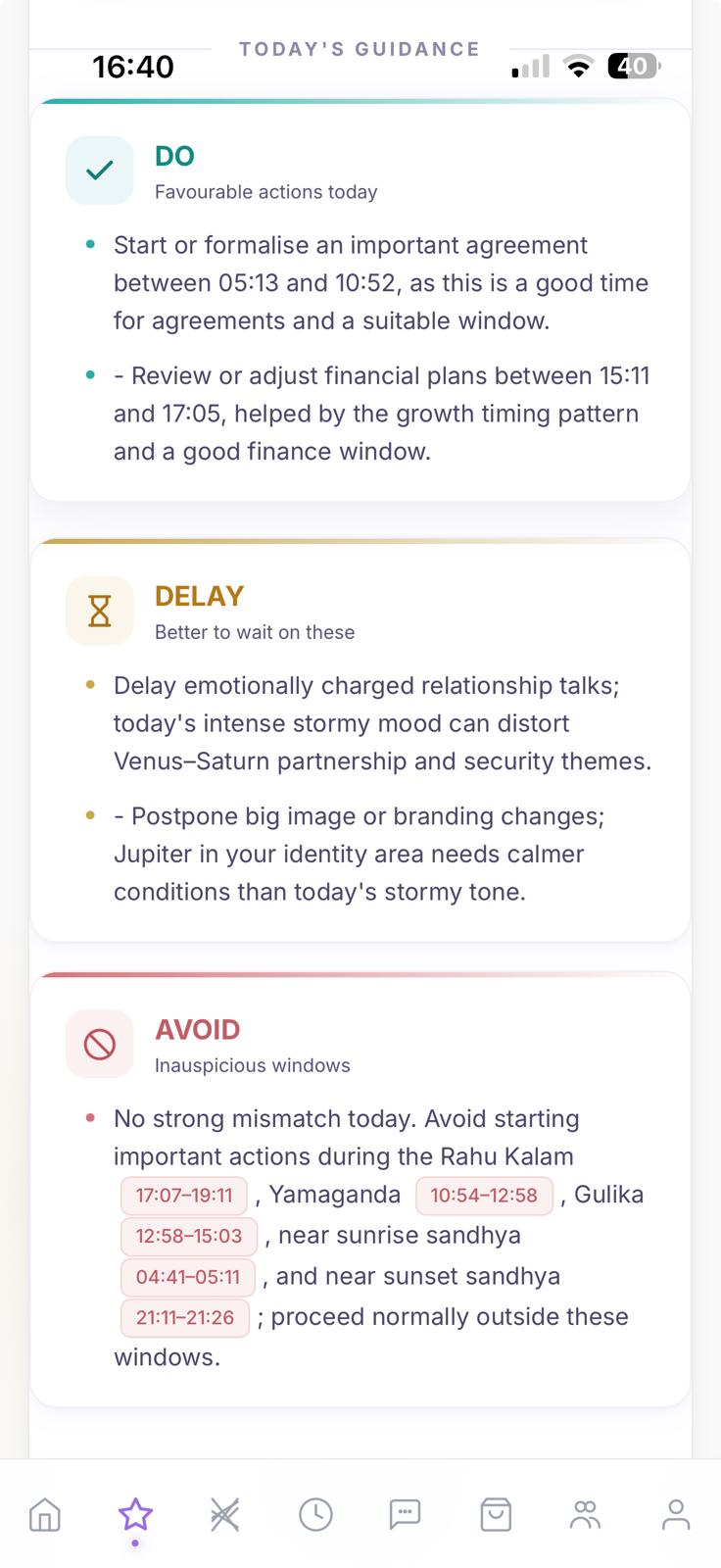
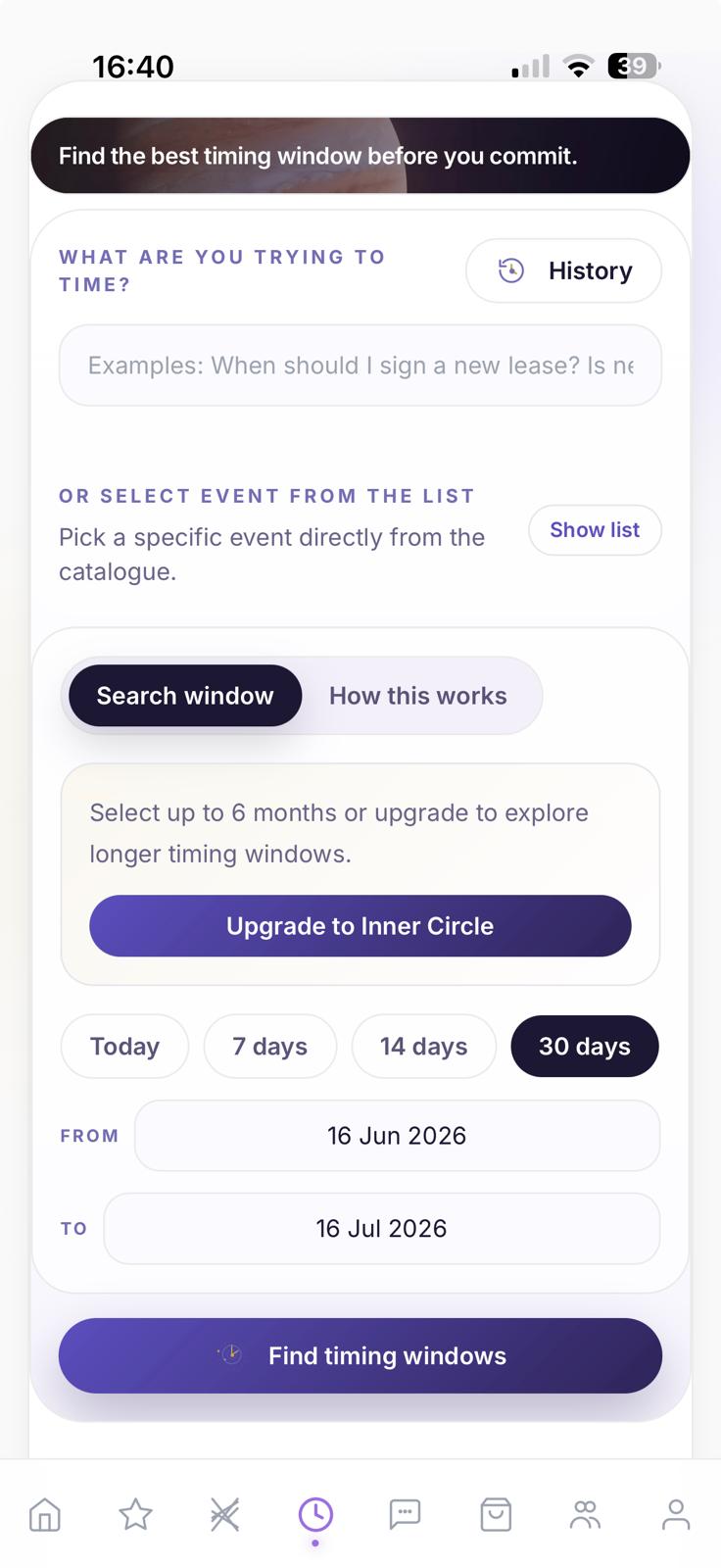
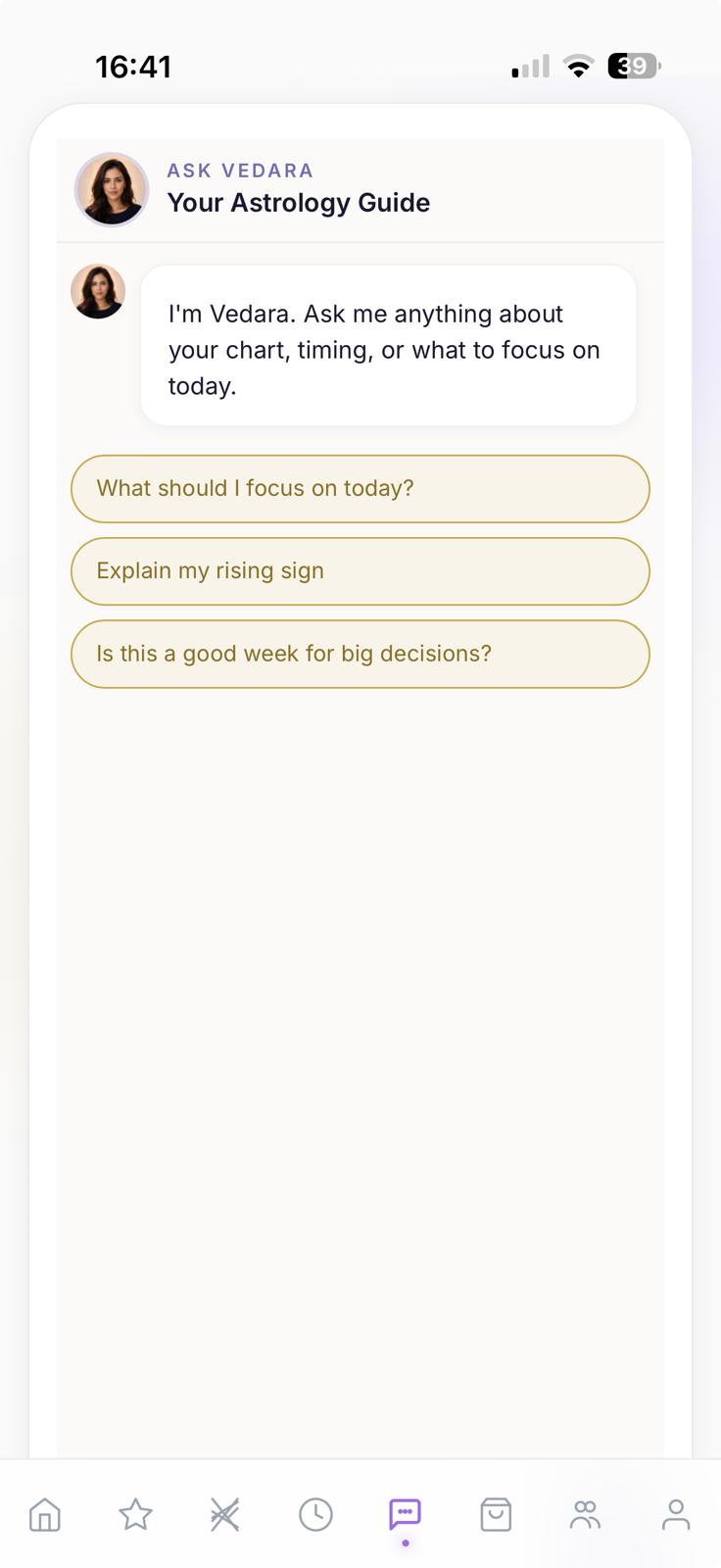
Swipe to see more →
Sidereal vs tropical, and why it changes the reading
The two systems place the zodiac differently. The tropical zodiac that Co-Star uses is anchored to the seasons. The sidereal zodiac that Vedara uses is anchored to the visible constellations. The gap between them is currently around 24 degrees, enough to move many placements by a whole sign. Neither is wrong. They answer different questions and belong to different traditions.
The bigger divergence is method. Vedic astrology adds timing systems that Western astrology generally leaves out: the Vimshottari dasha for life periods, and muhurta for choosing auspicious moments. That is the part Co-Star does not set out to do, and the part Vedara is built around.
If you want timing
Vedara is built to answer "when should I act?" with dasha and muhurta, not just "what is my day like?".
If you want Vedic
Sidereal calculations and Jyotish methods, rather than the tropical system.
If you want it explained
An AI Jyotish guide answers questions about your own chart in plain language.
Questions people ask
Does Co-Star use Vedic astrology?+
No. Co-Star’s own FAQ states it exclusively uses the tropical (Western) zodiac, and that all of its personalised content is based on that system. Vedara uses the sidereal (Vedic) zodiac.
Does Co-Star have dasha or muhurta timing?+
No. Those are Vedic tools and are not part of Co-Star’s feature set. Vedara includes both Vimshottari dasha periods and muhurta window finding.
Is Vedara a good Co-Star alternative?+
If you want Vedic, timing-focused astrology, with dasha cycles and auspicious windows and practical daily guidance, then yes. If you mainly want Western daily personality horoscopes and social features, Co-Star is built for that.
Does Co-Star use AI?+
Yes. Co-Star describes its content as produced by astrologers working with AI. So the honest difference between the two apps is the astrology system (Western vs Vedic) and the presence of dasha and muhurta timing, not whether AI is used.
Keep reading
Try the Vedic approach
See your sidereal chart, your current dasha, and your next good muhurta window. Free to start.
Get today's guidance→