Ideas & perspective
Moon Tonight in UK Time: A Practical Guide to What You’ll Actually See and How to Use It for Better Daily Timing
A critical reader-friendly, step-by-step guide to checking the moon tonight in UK time and using it as a low-friction timing tool for work, planning, and rest.
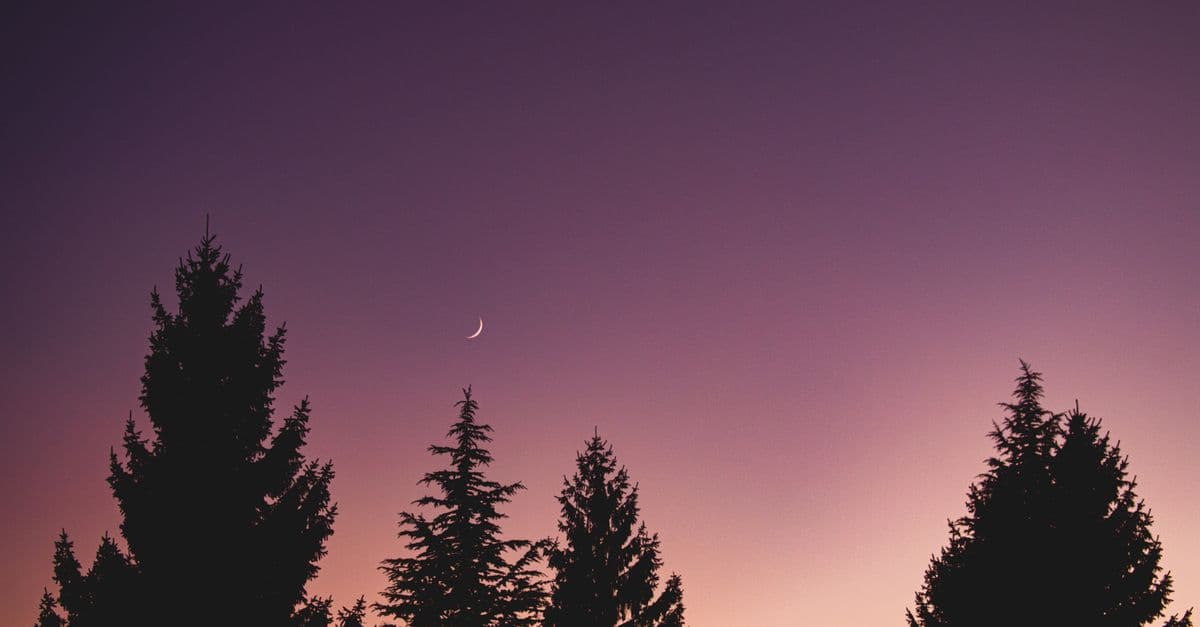
Most people who google "moon tonight uk time" want one thing: a quick answer. What phase it is, when it rises or sets, and whether it will even peek through the cloud cover.
We think that is the least interesting use of it. If you are an analytical planner, the sharper question is: "Given the moon tonight, what kind of day am I in, and what does that mean for my workload, meetings, or hard conversations?" The astronomy is the easy bit. The timing is where the leverage sits.
In this guide we treat the Moon as a repeatable timing signal, not a mystical mood lamp. Same phase and similar position in your chart, same kind of day. We will show you how to check the moon tonight in UK time in seconds, make sense of what you are seeing, and plug it into a simple decision rule you can keep for life.
Want a version of this logic that updates itself each day from your birth data? Check Today's Timing
What you need first (prerequisites, setup)
You do not need a telescope. You do not need belief. You need three things:
-
A reliable moon data source. Any site or app that gives current UK times for moonrise, moonset, and phase based on your town or postcode is fine. Check that it uses real astronomical data such as NASA JPL or Swiss Ephemeris [Swiss Ephemeris, 2024].
-
Your rough location and time zone. Anywhere in the UK shares the same civil time (BST or GMT). So you can use "London" as your reference even if you are in Manchester or Glasgow, and you will still be within a few minutes for rise/set.
-
A basic sense of the lunar cycle. One full cycle is about 29.5 days from new moon to new moon [NASA, 2023]. Bright half growing = waxing. Bright half shrinking = waning. You do not need more than that to start.
Optional, but potent:
- Your birth date, time, and place, so you can later map the Moon’s movement to your own chart and personal timing windows.
Common trap here: people install three polished apps, tap around for a week, and never commit to one method. Pick one accurate source and one habit. This only starts paying off when you repeat it.
Step 1: Get tonight’s moon times for your UK location
What to do
- Open your chosen astronomy or weather app.
- Enter a UK town or city (use your nearest city if your village is not listed).
- Note three numbers for today:
- Moonrise time
- Moonset time
- Current phase (e.g. Waxing Crescent, Full Moon, Last Quarter)
Write them in your calendar or notes app. Example: "Moonrise 15:42, set 02:13, Waxing Gibbous".
Why this matters
Most of the year, the Moon is actually in the sky while you are awake, but it drops out of awareness. Rise/set times tell you:
- Whether you can realistically see the Moon tonight without staying up until 3am.
- How "present" lunar energy is in your evening. A Moon that drags itself up after midnight lands very differently from one hanging there when you leave work.
From a Vedic timing view, the Moon is the fastest major body we track. It changes sign about every 2.25 days and drives the day-level emotional weather [Parashara, rough translation]. If you want a daily timing signal without learning full astrology, the Moon is the cleanest way in.
Common mistake to avoid
Do not obsess over the exact minute. If your app says moonrise 19:11 or 19:21, your nervous system will not register the distinction. Treat times as 15–30 minute windows. The precise degree only starts to matter when you bring your birth chart into it, not for basic visibility.
Step 2: Check the phase and brightness, not just "full or not"
What to do
Look at the phase label and percentage illumination:
- New Moon (0–1%): invisible or nearly so
- Waxing Crescent (1–49%): right-hand side lit, growing
- First Quarter (~50%): half disk lit, growing
- Waxing Gibbous (51–99%): almost full, growing
- Full Moon (99–100%): whole disk lit
- Waning Gibbous (99–51%): shrinking from full
- Last Quarter (~50%): half lit, shrinking
- Waning Crescent (49–1%): left-hand sliver, shrinking
If your app only gives the name, that’s good enough. If it gives a percentage, jot that down too.
Why this matters
Your brain and nervous system respond to light. More night-time light nudges melatonin and sleep cycles [Cajochen et al., 2013]. The lunar phase tells you how bright your evenings are likely to feel, especially around full moons.
Astrologically, we treat the waxing half of the cycle (new → full) as growth, launch, and experimentation territory. The waning half (full → new) is the time for editing, closing, and rest. Our simple working rule: growing light = build; shrinking light = clean up.
You can treat this as a small controlled experiment:
- On waxing days → schedule starts, outreach, pitches, first drafts.
- On waning days → schedule reviews, clean-up, retrospectives, endings.
Then review your month. If after 2–3 cycles you genuinely see no pattern in ease or outcomes, throw it out. Many of our users do notice that certain tasks slide more easily when matched to the phase direction.
Common mistake to avoid
Turning "full moon" into a dramatic one-night event. The peak is smeared out over several days. The high-energy window is roughly from 2 days before to 2 days after exact full. Do not pile all your hopes into the single timestamp the app shows you.
Step 3: Decide which of the four simple moon-type days you are in
What to do
Translate tonight’s phase into one of four practical "day types":
-
New Moon ±1 day (dark start days)
- Phase: New Moon or very thin crescent.
- Use for: quiet planning, seeding ideas, journalling, choosing priorities for the next 2–4 weeks.
-
Waxing Half-Cycle (from thin crescent up to just before full)
- Phase: Waxing Crescent, First Quarter, Waxing Gibbous.
- Use for: starting projects, outreach, testing, sending proposals, public launches.
-
Full Moon ±1 day (peak days)
- Phase: Full.
- Use for: review, visibility, sharing results, presentations, social events.
-
Waning Half-Cycle (after full down to thin crescent)
- Phase: Waning Gibbous, Last Quarter, Waning Crescent.
- Use for: trimming commitments, tidying, cancelling, finishing reports, offboarding clients.
Mark which type today is in your digital calendar title (e.g. "[Waxing]" or "[Waning]").
Why this matters
You do not need eight delicate meanings. For actual life design, four broad categories are enough. The point is constraint: you stop pretending every day is equally suitable for everything.
One of our internal rules of thumb:
- If the moon tonight is waxing: lean towards yes for sensible new commitments.
- If the moon tonight is waning: lean towards no or later unless there is a compelling reason.
That is not cosmic punishment. It is a pre-commitment hack. You hand a small slice of decision fatigue to an external, predictable rhythm.
We unpack the phase logic and decision types more fully in our guide on moon phases in the UK and planning.
Common mistake to avoid
Do not hand over your agency. The moon phase is a tie-breaker, not a judge. If a contract lands on your desk on a waning day and the deal expires tomorrow, you sign when you need to.
Step 4: Match the moon tonight to one key decision or task
What to do
Now you have tonight’s phase and day type. Pick one domain where timing actually matters this week:
- Work: pitch, client call, code deploy, job application.
- Money: renegotiation, spending decision, saving/investing action (we dig into this more in our piece on financial astrology as timing, not prediction).
- Personal: hard conversation, date, boundary-setting, social event.
Then use this simple mapping:
- New Moon days → choose what to focus on for the next fortnight. Do backlog triage.
- Waxing days → push one thing you want to grow or gain traction.
- Full Moon days → share something finished. Demo, publish, present.
- Waning days → prune one commitment, unsubscribe, or close something out.
Resist the urge to re-optimise your entire life. Run one conscious experiment at a time: "Because the moon tonight is waxing, I will send this email today instead of parking it."
Why this matters
Timing helps when it removes friction, not when it adds superstition. That looks like:
- You being mentally aligned with the category of work you are doing.
- Other people being more receptive, because groups unconsciously track similar cycles.
In Vedic language, the Moon is the mind. The waxing half supports outward, mind-expanding activities. The waning half is better for inward, mind-consolidating ones. That is enough to sketch your weekly energy budget without touching houses or dashas.
Common mistake to avoid
Do not scatter this across everything. If you shift your whole schedule by the Moon at once, you have no baseline. Keep most of your week as-is. Move one meaningful thing each week in sync with the Moon and track both feel and outcome.
Step 5: Layer in your personal Moon sign (optional, but powerful)
What to do
Once the basic rhythm feels familiar, bring in your natal Moon sign:
- Use a proper calculator to find your Vedic Moon sign from birth date, exact time, and place. A tool based on Swiss Ephemeris will give sub-degree accuracy.
- Each night, check:
- Which sign the Moon is currently in, and
- How that sign relates to your natal Moon sign.
In Vedic astrology we care a lot about the current Moon sign relative to your natal Moon; that frames the mental weather and bandwidth for certain tasks [Raman, 1992]. You do not need the full Sanskrit toolkit; you only need this skeleton:
- When the sky Moon is in the same sign as your natal Moon → emotionally loud, more reactive.
- When it is 6, 8, or 12 signs away → more friction, shorter fuse.
- When it is 1, 5, 9 signs away → generally supportive, easier flow.
Why this matters
Two people under the same "moon tonight in UK time" forecast are not living the same inner day. The identical waxing gibbous can feel energising to one chart and flat to another.
This is where deterministic systems earn their keep. Given your birth data, the software will always give the same Moon sign, same degree, same sequence of days. Over time you can watch:
- Which current Moon signs line up with your best focus days.
- Which ones keep coinciding with conflict, fog, or fatigue.
After a few months you have a personal pattern that beats any generic lunar planner.
Common mistake to avoid
Do not dive into every extra layer at once: aspects, nakshatras, transits, yogas. That is how people overwhelm themselves and decide "astrology doesn’t work". Phase + sign-relative-to-your-Moon already gives you a surprisingly rich signal.
This is where personal timing matters. Vedara shows your daily timing windows based on your birth data. Check Today's Timing
Step 6: Build a repeatable nightly (or weekly) check-in habit
What to do
Pick a rhythm that fits your life:
-
Nightly 60-second check
- After dinner, glance at your app.
- Note: phase, waxing/waning, and whether tomorrow is a "push", "share", or "prune" day.
- Nudge one task in your calendar to match.
-
Weekly 10-minute planning session
- On Sunday, scan the coming week’s phases and mark:
- Waxing days → schedule outreach / growth work.
- Waning days → block reviews, cancellations, admin.
- Full Moon window → put public or high-visibility actions.
- New Moon window → reserve 30–60 minutes for strategy.
- On Sunday, scan the coming week’s phases and mark:
Why this matters
If the system only lives in your head, it will lose to email and Slack every time. Once lunar data lives inside your calendar, it quietly shapes what "makes sense" on a given day. That is the real benefit: you are not inventing timing from scratch every morning.
We treat this similarly to how we handle planetary hours: not as commands, but as a grid you lay over your day to cut down on pointless choice.
Common mistake to avoid
Do not treat gaps as failure. The Moon will be back in almost the same pattern in ~29.5 days. If you ignore this lunation, you get a near-duplicate rerun next month.
What to do if it is not working (troubleshooting, edge cases)
If you have tried this for a couple of cycles and it still feels useless, walk through these.
1. "I cannot see the moon tonight at all"
- First, check whether it is even above the horizon in your waking hours. If moonrise is at 02:30, your evening sky will be empty.
- UK cloud cover is often thick. Visibility does not change the phase, so still use the phase data even if the sky looks like a grey wall.
2. "My days feel random, phase or not"
- You might be tracking the wrong variable. Instead of overall "good/bad day", track type of task. For instance: do waning days quietly outperform for email and admin, even if your mood is average?
- Give it at least 2 full cycles (around 2 months). One lunation is a noisy sample.
3. "I am more affected by work cycles than the moon"
Of course you are. The Moon is a subtle but consistent signal. A brutal product sprint or exam season will dominate. Use lunar timing mainly for things you can slide by a few days: deep work blocks, side projects, personal talks.
4. "The timing feels off compared to how intense my life is"
Then you are running into the limits of phase-only planning. The Moon phase is the public weather. Your personal chart is the microclimate. If your birth chart is under heavy Saturn or Rahu emphasis, for example, a "gentle" waxing phase can still feel like a slog.
That is where adding larger cycles (Saturn, Jupiter, dashas) stops being optional. We treat lunar timing as a fine-tuning layer on top of those big cycles, not a substitute.
5. "This is drifting into superstition for me"
Dial it back. Use the Moon only as:
- A label for day types (start / share / prune / rest).
- A prompt to schedule reflection (new/full windows).
If you catch yourself thinking "I cannot send this email because the Moon is waning", stop and reset. The whole point is less anxiety and cleaner decisions, not a new source of dread.
Conclusion
The whole point is less anxiety and cleaner decisions, not a new source of dread.
Clear answers
Frequently asked questions
Is the moon the same everywhere in the UK tonight?
Yes, for practical purposes. Phase is identical. Moonrise and moonset times nudge slightly with latitude and longitude, but the difference between, say, London and Edinburgh is in minutes, not hours. You can safely use a single UK city as reference.
Does science say the moon phase changes my behaviour?
Research on direct lunar effects on human behaviour is mixed and generally weak [Lilienfeld et al., 2010]. We are not claiming lab-grade causal proof. We use the Moon as a deterministic rhythm to structure decisions, which you can test against your own life. If it does nothing for you, you drop it.
Is this Western or Vedic astrology?
The sky itself does not care. The Moon’s phase and position are the same. Our timing logic is Vedic-based: we treat the Moon as the mind and as the fastest, most personal timer, and we care about its sign in relation to your natal Moon, not just your Sun sign.
How is this different from full moon rituals and manifestation guides?
We are not asking you to charge crystals, write wish lists, or assume the universe has its ears pricked at full moon. We treat full moons as peak visibility and review windows: good for sharing, presenting, and taking stock. If rituals help you focus, keep them, but they are accessories, not requirements.
Can I sync this with other timing systems?
Yes. Lunar timing usually plays nicely with:
- Habit systems (e.g. 2-week sprints mapped onto the waxing half).
- Seasonal planning.
- Larger Vedic cycles like Saturn returns, Jupiter transits, or nodal periods.
The only real danger is stacking so many timing schemes that you never actually move. Start light. Let the Moon be your thinnest, simplest layer.