Birth charts and sidereal calculators
Moon Phase Soulmates, Debunked: What the Viral Test Really Measures (and What Serious Astrology Actually Looks At)
The moon phase soulmate test is TikTok catnip, not a relationship x‑ray. We unpack what it actually measures, why it feels meaningful, and what serious Vedic astrology uses instead when you care about compatibility and timing.

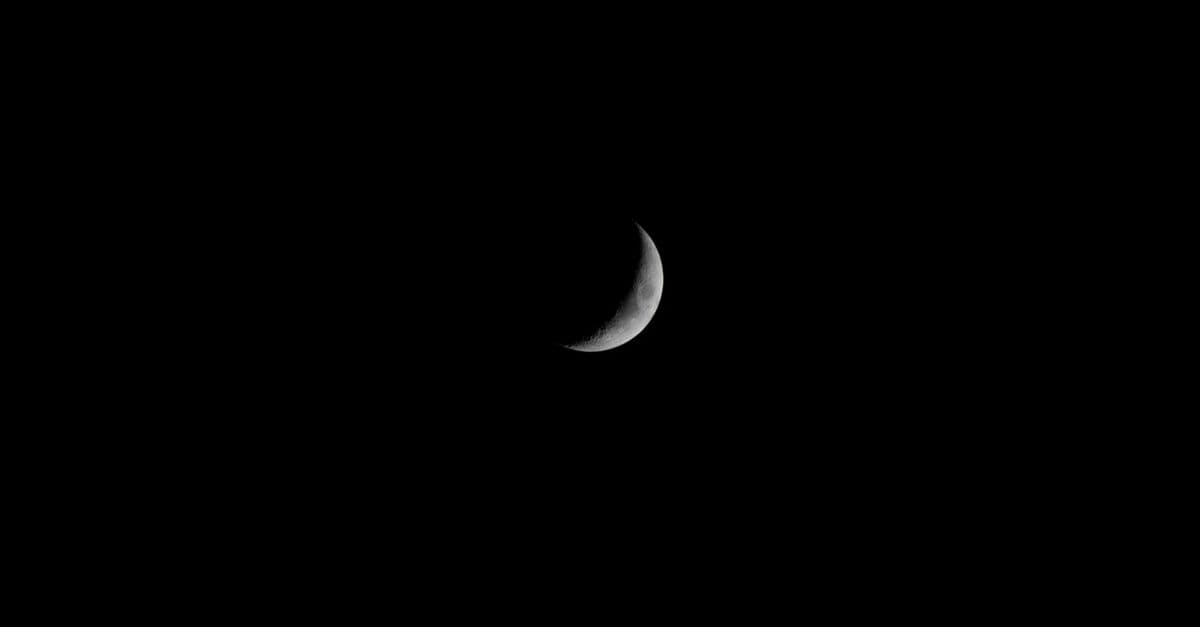
Most moon phase "soulmate" tests are basically personality quizzes in costume, not relationship tools. They compare two frozen Moon pictures, then spin a cute narrative. That can feel personal, but it is not how any serious astrology system works with attraction, timing, or long‑term compatibility.
If you enjoy the trend, keep it in the "aesthetic fun" bucket. If you are making real choices – who to build a life with, when to commit, when to walk away – you have to move from single‑variable gimmicks to your actual Vedic astrology chart.
The Vedara rule: one variable = vibes, multi‑variable = decision input
We use a simple internal rule when we look at things like moon phase soulmate calculators:
If a relationship test uses one variable, treat it as vibes. If it uses multiple clearly defined variables, then maybe it has decision value.
Moon phase soulmate tests sit squarely in the "vibes" bucket:
- they use date only, no birth time, no place
- they reduce the Moon to phase only, ignoring sign, house, and aspects
- they leap from that straight into "soulmate" territory
Compare that to a proper how to read your birth chart flow, which starts with all three birth inputs (date, exact time, place), converts that into a full sky map, and then unpacks:
- the Ascendant sign and house structure
- each planet’s sign, house, and aspects
- timing cycles layered over the base chart
You can dive into this more in our birth chart topic hub, but the heart of it is simple: serious astrology takes work. If a love test skips that work, you are looking at someone’s opinion, not a robust system.
What the moon phase test can be used for (if you insist on using it)
If you like the look and want to keep playing with moon phase soulmate tools, we are not going to tell you to ban them. We are going to tell you to downgrade their importance.
Here are roles that actually make sense:
- Conversation starter. Use the verdict to open a real talk about emotional habits. "Our phases ‘clash’ – OK, what do you actually do when you are overwhelmed? Shut down? Overshare?" The test is just the opener, not the answer.
- Creative prompt. Use the "compatible" phases as a motif for art, poetry, a playlist, even a couples ritual. Not prediction – just symbolism.
- Self‑reflection hook. If the text hits a nerve or strokes your ego, ask why. The mirror it holds up can be more interesting than the supposed "compatibility".
Where it starts causing problems, from our point of view, is when you use it to:
- explain away clear red flags
- treat it as fate: "we made a full Moon, so this must be my person"
- dump someone kind and steady because a widget gave you a "bad" phase combo
Astrology, used cleanly, helps you see yourself and the situation more sharply. The moment a test blurs that view, it has gone past its brief.
Appearance trends, moon phases, and why people mix them up
Another reason the moon phase soulmate idea spreads so fast is that it rides on the back of "do I look like my chart?" content.
You will see claims like:
- "New Moon babies have softer features"
- "Full Moon people have big, bright eyes"
Most of this is anecdote or pure aesthetic pattern‑making. When we are actually working a chart and talking about appearance, we start with the Ascendant and its ruler, then the houses tied to the body.
So if you care about something like Virgo rising appearance, the Moon’s phase is not the first stop. You look at:
- Virgo on the Ascendant
- Mercury’s sign, house, and condition
- any planets occupying the 1st house
If someone has Virgo rising and was born under a particular Moon phase, that phase might flavour their internal mood cycle. The baseline traits – the clean lines, the quietly edited style, the precise or observant gaze that Virgo risings so often show – come from the Ascendant structure, not from where the Moon sits in its 29‑day light cycle.
The same lens applies to all the "Cancerian woman physical appearance" threads and "beautiful eyes" talk. To the extent there is a pattern, it tends to connect to Cancer placements and the Moon itself, not which day of the lunar month you were born. If you want to see that logic in action, you can read our breakdown on why Cancer women are said to have beautiful eyes.
What a serious love‑and‑timing reading actually checks
Let’s put a moon phase test side‑by‑side with a stripped‑down Vedic relationship reading.
Synthetic example:
Two people are thinking about moving in together. Instead of their Moon phases, we would look at things like:
- Person A’s 7th house (partnership) lord – sign, house, and strength
- Person B’s 7th house situation
- both Moons: sign and nakshatra
- Venus and Mars in each chart
- current Vimshottari dashas and key sub‑periods
- upcoming transits through their 4th and 7th houses over the next year
From that, in classic Jyotish language, we can say something like: "You are in a Venus period, which often coincides with relationship focus; your 4th house of home is activated; this year is more aligned with formalising living arrangements than the last one was." The logic is deterministic: same chart inputs, same reading.
What we cannot honestly say is: "Your Moon images formed a circle on a website, therefore co‑habiting will work." That leap has no technical base in Vedic practice.
If you are used to the instant hit of a moon phase soulmate result, a deeper process like this will feel slow and maybe annoyingly detailed. That is part of its value. Decisions about home, money, and emotional entanglement deserve more than two PNGs of the Moon overlapping.
Trade‑offs and when our reasoning fails
We are not going to pretend the "serious" route is painless or always neat.
There are real trade‑offs:
- Moon phase tests are quick. Full chart work costs time, focus, and usually either learning or paying for someone else’s expertise.
- Complex charts can paralyse. If you already overthink, twelve houses and nine planets can turn into a new way to stall instead of choose.
- Symbolism is not lab science. Jyotish uses a symbolic framework, not double‑blind trials. You still have to check it against what you can actually see and measure in your life.
Where might our careful scrutiny about moon phase soulmate tests be missing something?
- If you treat the test purely as shared myth, not as proof, it can strengthen a bond in the same way a favourite story or song does.
- If you truly do not have birth times, then yes, the Moon sign and phase are sometimes all you have. In that stripped‑down case, a Moon‑only comparison is at least using some chart data – as long as you keep your expectations modest.
Our actual boundary is narrow: the moment someone claims a moon phase soulmate result should carry the same weight as a full compatibility reading, we part ways.
If we were deciding this for ourselves
Here is how we, at Vedara, would handle moon phase soulmate content in our own lives:
- We would use the tests for fun, screenshots, inside jokes, and light bonding.
- We would ignore them completely when it comes to moving in, marrying, merging finances, or deciding whether to stay in something that already feels harmful.
- For real choices, we would return to the full Vedic chart, current timing cycles, and what is tangibly happening between the two of you.
If we wanted to take a relationship seriously, our process would look like:
- Pull both sidereal charts and confirm the Ascendants are accurate.
- Scan Moons, 7th houses, Venus, and key dashas for relationship focus or stress.
- Translate that into direct questions: "Where do our needs scrape against each other? When does each of us have more room for commitment?"
- Reality‑check: does daily life support or contradict the chart story?
And still, we would not let astrology overrule clear evidence. If someone keeps breaking your trust, no amount of "matching moons" makes that scenario safe. If a relationship is kind, stable, and you grow inside it, a "bad" moon phase verdict does not cancel that.
If you want to see what structured timing looks like, beyond visual trends, you can explore how a deterministic system like Vedara reads your cycles and relationship windows.
The Moon phase soulmate trend can be lovely when it stays in its lane. Just do not confuse a pretty overlay with the actual map.
Conclusion
Just do not confuse a pretty overlay with the actual map.
Clear answers
Frequently asked questions
What does the viral moon-phase soulmate test measure?
Most "moon phase soulmate" tools ask for two birth dates, look up the Moon phase for each person, and compare them. Some use a very simple visual logic:
- two crescents that make a full circle → "true soulmates"
- very similar phases → "too similar / twin"
- clashing shapes → "challenging match"
You can see variations of this on sites that build their pitch around the idea that compatible lunar phases = soulmates.¹ Revellia — Moon Phase Compatibility Calculator Jobcannon — Moon Phase Soulmate Another site just says it plainly: there is no scientific evidence that birth Moon phases predict personality or relationship outcomes.Moonagetoday — Moon Phase Soulmate
Under the hood, these tests are doing three simple things:
- a Moon phase lookup from your date of birth
- a visual pattern check (how the two phases look together)
- a story generator linked to that pattern
That story might feel accurate or moving. But it is hanging off one tiny data point. In real astrology, we would never call that a compatibility reading.
Why does the moon-phase soulmate idea feel persuasive?
If it is that thin, why does it grab so many people?
Because it presses three very old psychological buttons:
- Visual proof bias. When two Moon images line up into a clean circle, the brain yells "destiny". Symmetry feels meaningful even when the rule behind it is made up.
- Low‑effort intimacy. Type two dates, get an answer. It pretends to offer deep insight without asking you to touch the hard topics: conflict style, money, family baggage, actual values.
- Cosmic aesthetic. The Moon’s phases are already poetic. So the verdict lands softer than "your Saturn is in their 7th house, let’s unpack that."
We understand the pull. We also see the quiet damage when someone stays in a painful situation or dismisses a genuinely supportive bond because "the Moons matched / didn’t match".
If you want to keep the trend in your life, be blunt with yourself about what it is: an aesthetic game, not a navigational tool.
What does a fuller astrology compatibility reading consider?
Once you move from TikTok filters to a real Vedic astrology chart, the entire landscape changes: the inputs, the logic, and what counts as a meaningful "signal".
A basic compatibility scan in Jyotish will usually include, at minimum:
- each person’s Ascendant (rising sign) and full house set‑up
- Moon sign and nakshatra (emotional wiring and timing flavour)
- Venus and Mars for attraction and desire patterns
- key houses: 4th, 5th, 7th, 8th, 11th (home, romance, partnership, intimacy, shared gains)
- the timing cycles (dashas) currently active for each person
The Moon phase by itself is a sliver inside one of those pieces.
To ground this:
- A Cancer man and Leo woman compatibility reading in real astrology is not "water + fire = drama". We would ask: where do Cancer and Leo sit in each chart? Who owns a strong 7th house? How do their Moons speak to each other? Is someone in a Venus dasha that supports commitment, or in a Rahu period that pulls toward experimentation and instability?
- A viral moon phase soulmate test throws all of that away and jumps straight to: "your New Moon pairs well with her Full Moon".
Those are different universes. One is a relational system with moving parts. The other is a filter thrown over a single sky photo.
Evidence used
Sources
- Revellia — Moon Phase Compatibility Calculator
revellia.com
Reference used to support the factual description linked from the article.
- Jobcannon — Moon Phase Soulmate
jobcannon.io
Reference used to support the factual description linked from the article.
- Moonagetoday — Moon Phase Soulmate
moonagetoday.org
Reference used to support the factual description linked from the article.